
Community Schools Partnership
Community Schools work because they create an ecosystem that treats the whole child: integrating the academic, social, emotional, and health supports that make learning possible, and anchoring those supports in genuine partnership with families and the wider community. Community school strategies thrive when they are anchored in programs, services, and relationships that truly reflect the communities they serve. Whether in the early stages of implementation, deepening an existing model, or scaling a strategy that works, Ahali meets community school teams where they are, partnering at whatever level of support is needed to bridge gaps and foster opportunity.
-
Before a community school strategy can take root, it needs to be grounded in what the community actually knows, needs, and wants. Ahali facilitates listening sessions, asset inventories, and participatory mapping processes that surface the strengths already present in your school community — and illuminate the gaps that programming and partnerships should address.
-
For schools building their community school model from the ground up, Ahali serves as a backbone partner: coordinating integrated student supports, managing partner relationships, tracking outcomes across pillars, and ensuring the work is coherent, accountable, and built to last.
-
For established community schools already working with a coordinator or lead agency, we offer a menu of evidence-aligned programs and services that complement your existing infrastructure, filling gaps across pillars without burdening your coordination load.

One Framework. Four Pillars.
YOUR COMMUNITY SCHOOL STRATEGY, BROUGHT TO LIFE
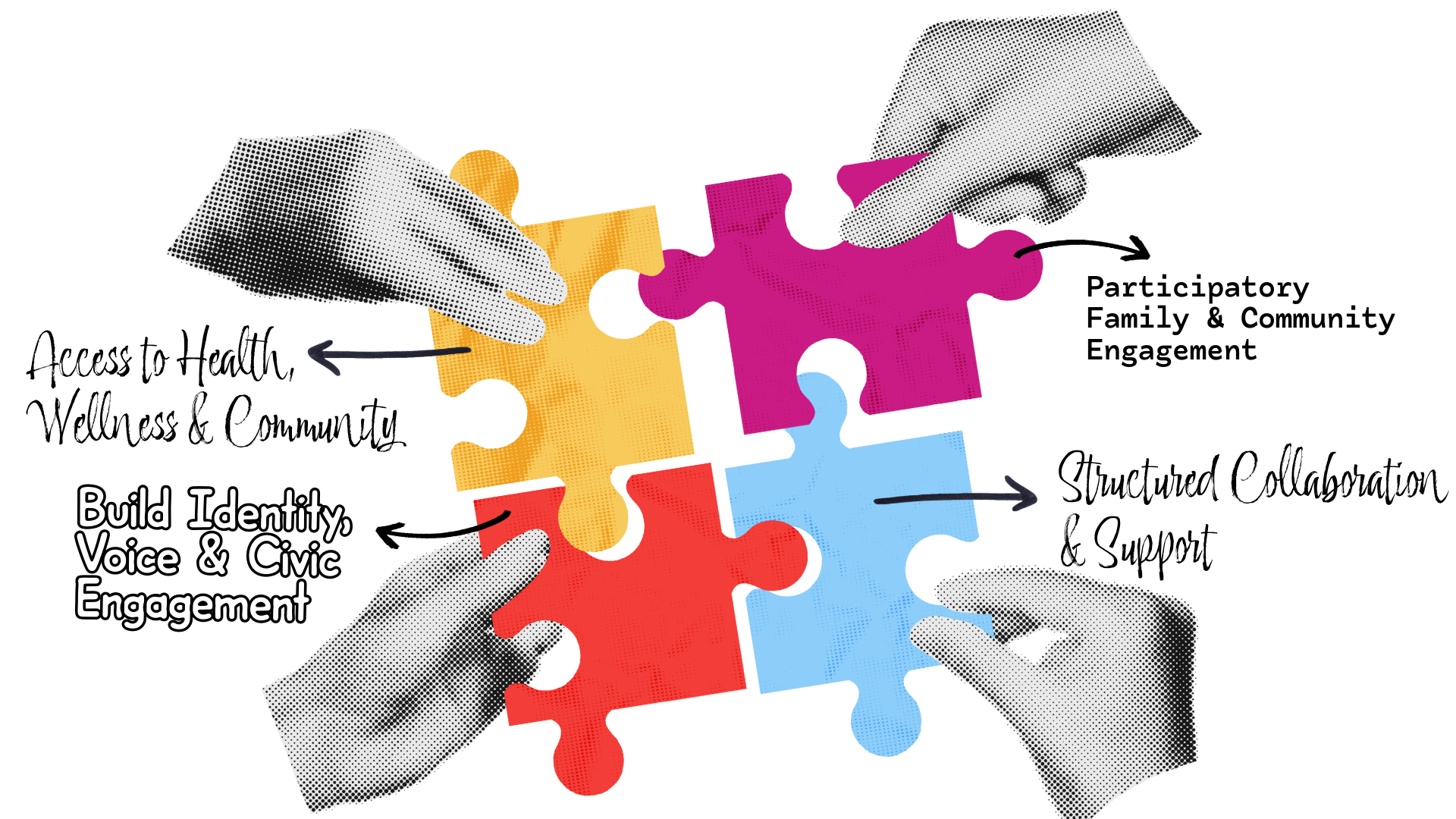
What Ahali Brings To Your Community School Initiative

A strong Integrated Student Supports strategy ensures that health, mental health, and social services are woven into the life of the school and available to students and families.
Pillar 1: Integrated Student Supports
What Ahali brings to community school partnerships: Through our clinical partner network, we coordinate access to individual therapy and family wellness groups for students and families identified for Tier 2 and Tier 3 support, managing the referral pathway, school-side coordination, and outcome tracking in proactive collaboration with your team.
-
A card-based storytelling methodology that engages students, families, and community members in participatory resource mapping — surfacing existing assets, identifying gaps in student supports, and centering community voice in the process of building a more responsive school ecosystem.
-
A well-designed referral pathway is the connective tissue of an integrated student supports strategy — ensuring that students identified for Tier 2 and Tier 3 support can access the right services at the right time. Ahali works alongside coordinators and school leadership to build and manage referral systems that are clear, culturally responsive, and sustainable.
-
Ahali maintains an active network of clinical and community wellness partners — from individual therapists to family wellness groups — so that community schools can offer meaningful care options without the overhead of building and managing those provider relationships independently.

An effective Expanded & Enhanced Learning strategy builds identity, voice, and civic engagement alongside academic skills; extending learning beyond the school day.
Pillar 2: Expanded & Enriched Learning
What Ahali brings to community school partnerships: A suite of owned enrichment programs designed specifically for community school contexts; each one built to engage young people as the protagonists of their own learning.
-
A card-based storytelling methodology that engages students, families, and community members in participatory resource mapping — surfacing existing assets, identifying gaps in student supports, and centering community voice in the process of building a more responsive school ecosystem.
-
Students thrive when they can see themselves in their learning. Ahali connects community schools with cultural and civic partners — including libraries, historical societies, museums, and community-based organizations — whose programming builds cultural identity, historical awareness, and civic engagement, extending the school day with experiences that ground students in who they are and where they come from.
-
Wellbeing isn't only built in therapy rooms — it's built on dance floors, in art studios, and on playing fields. Ahali connects community schools with movement- and arts-based wellbeing partners whose programming supports students' physical, emotional, and creative development, extending the school day with experiences that nourish the whole child.

Pillar 3: Active Family & Community Engagement
A strong Family & Community Engagement strategy anchors partnership in meaningful and sustained relationship.
What Ahali brings to community school partnerships: A participatory, community-centered approach to family and community engagement — grounded in the belief that the people closest to the work already know what they need. We help community schools build the structures, programs, and relationships that make family engagement genuine rather than performative.
-
B³ is a prevention-oriented relational health curriculum that engages young people ages 13–17 and the adults who care for them in building the connection skills that sustain mental health and community belonging — moving together through three developmental phases: Being, Becoming, and Belonging.
-
No two school communities are alike, and family engagement that works in one context may fall flat in another. Ahali works alongside school and community teams to design engagement experiences from the ground up — developing facilitation approaches, structures, and programming that reflect the specific relationships, assets, and goals of your community school.
-
Ahali facilitates listening sessions and co-design workshops that bring community voices into the room where decisions are made — helping community schools build the kind of participatory culture where families are treated as partners, not audiences.

Pillar 4: Collaborative Leadership & Practice
A successful strategy for Collaborative Leadership & Practice builds upon and enhances existing infrastructure through intentional planning and streamlined coordination processes.
What Ahali brings to community school partnerships: Ahali serves as the backbone partner — the coordinating infrastructure that makes everything else sustainable. We bring school-based mental health expertise, program management experience, and a deep commitment to community-centered practice to the coordination role.
-
A community school strategy is only as strong as the coordination holding it together. Ahali manages the day-to-day operational infrastructure of your community school initiative — tracking partner deliverables, maintaining communication across stakeholders, and ensuring that programs and services are integrated, accountable, and aligned with school goals.
-
Multi-Tiered Systems of Support are only effective when the tiers are clearly defined, consistently implemented, and well-coordinated across school and community partners. Ahali works alongside school leadership and coordinators to strengthen MTSS infrastructure — supporting data review processes, tier assignment, and the coordination of wraparound services for students receiving elevated support.
-
Sustainable community school strategies require staff who understand the model, trust the process, and have the skills to implement it well. Ahali designs and facilitates professional development experiences that build shared language, deepen relational practice, and strengthen the organizational conditions that make community school work coherent and lasting.